
I started online tutoring in early 2023, on the theory that an undergraduate background in maths plus three years of corporate writing would be sufficient to teach high-school SAT and basic college-level writing. It was, in fact, sufficient. The job that nearly broke me was not the teaching. It was figuring out which platform was actually worth the time after the platform took its cut.
What I tutored and to whom
Two subjects: SAT maths preparation and undergraduate-level essay writing. Most of my students were high school juniors and seniors and early-stage college students. Average session: 50 minutes, weekly, $35–$95 per session depending on platform and direct vs. marketplace.
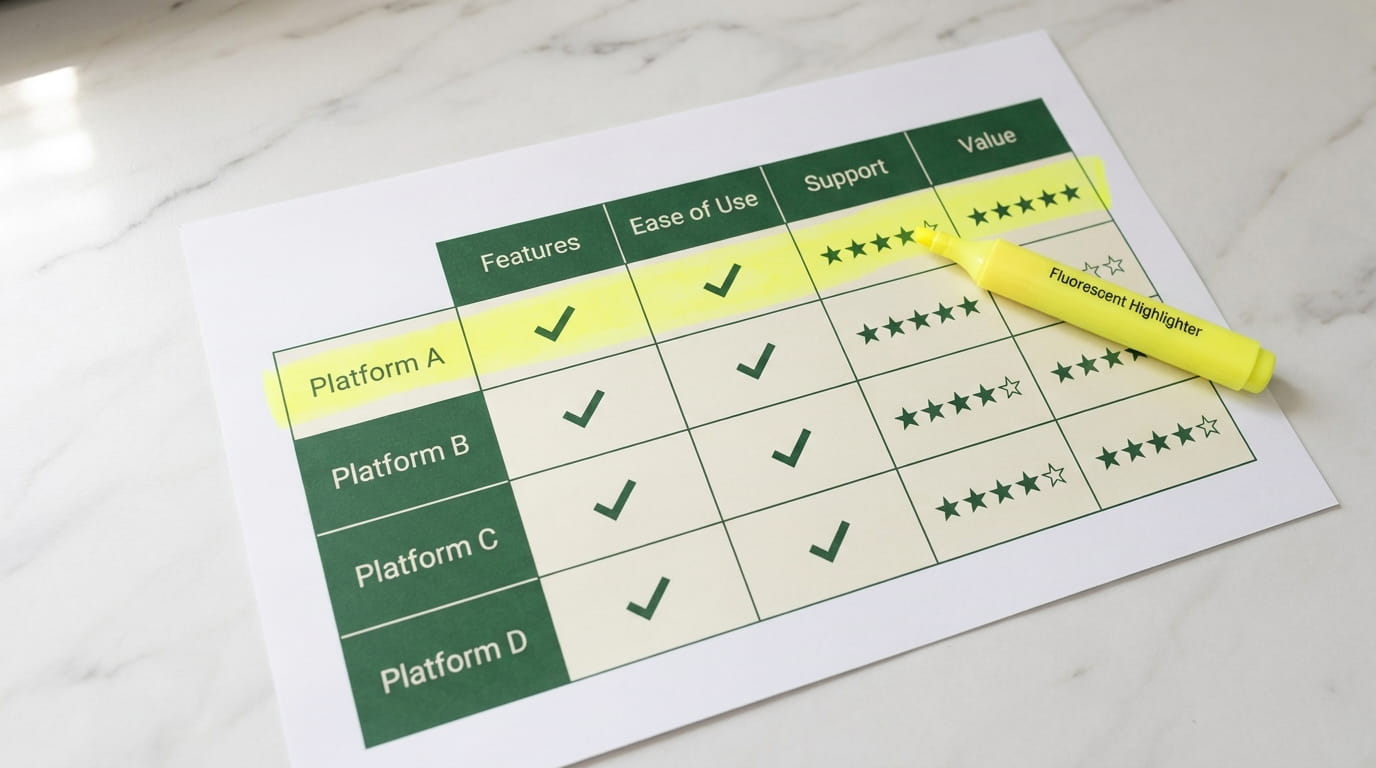
Over two years I tried eight platforms: Wyzant, Preply, Varsity Tutors, Cambly, Tutor.com, Italki, Outschool, and Superprof. I logged earnings, hours billed, hours of unbilled prep, and platform fees in a spreadsheet for the first six months. After six months the ranking was so clear I dropped six of the eight.
The platforms, ranked by what I actually earned
Effective hourly rate, after platform fees and an estimate of unbilled prep time per session, averaged across the period I used each one.
| Platform | Listed rate | Platform fee | Effective $/hour to me |
|---|---|---|---|
| Wyzant | $45/hr | 25% (sliding) | $28 |
| Preply | $28/hr | 18–33% | $17 |
| Varsity Tutors | (set by them) | ~50% | $22 |
| Cambly | $0.17/min | none | $10 |
| Tutor.com | $10–$20/hr | none | $14 |
| Italki | $22/hr | 15% | $18 |
| Outschool | $60/class | 30% | $26 |
| Superprof | $50/hr | subscription model (free for me to keep, paid by student) | $38 |
The headline rates were all over the place; the after-fee rates were also all over the place but in a different order. Cambly's "$0.17 per minute" sounded like $10.20/hour, which is what it was. Wyzant's "$45/hour" became $28 after the platform's 25% cut. Superprof had a subscription model where the student paid Superprof a one-time fee for access; I paid no platform cut on lessons, and could even move students fully off-platform after the first session, which made the effective rate the highest.
Why direct tutoring beats every platform
By month nine of platform tutoring, my effective rate had risen modestly — better reviews on Wyzant unlocked higher listed rates, Superprof connections converted to direct clients — but the ceiling was clearly the platform itself. The same hour of teaching, with the same student, paid 30–50% more when I billed the student directly via Stripe instead of through the platform.
Most platforms' terms of service prohibit moving students off-platform during the contract period. Some prohibit it indefinitely. Read the specific terms before doing this. Superprof's model explicitly permits it after the first session; Wyzant and Preply prohibit it; Italki technically prohibits it but enforcement appears minimal.
My system now: use a platform to acquire a student. After the first month, if the student is a fit, offer a small direct-billing rate ($55/hour vs. $70 on the platform) that benefits both of us. The platform loses; the student saves; I earn more. The platform's incentive structure makes this inevitable; it is the marketplace's problem to solve, not mine.
Tutoring platforms are customer-acquisition channels, not employers. Treat them as such, and the math becomes more workable.
The system I use now
I keep two platforms active: Wyzant for SAT students and Superprof for college writing students. The acquisition flow is to take new students through the platform, see how they fit, and after about a month — sometimes longer — give them the option to continue on a direct-billed monthly retainer if their term-of-service permits it. About 40% take the offer.
Total weekly load: 8–10 hours of paid tutoring, mostly evenings and weekends. Effective rate, blended across platform and direct: $42/hour. Annual gross from tutoring last year: about $12,400. Compared to the freelance writing book, which pays roughly twice that hourly, tutoring is a topped-out side income. I keep it because the student work is genuinely satisfying in a way writing is not.
Advice if you are starting
- Avoid the lowest-rate platforms entirely. Cambly, Tutor.com, and most "global" platforms targeting non-native English speakers pay $10–$15/hour by design. There is no skill ladder there.
- Optimize for review-driven rate increases on one platform. Wyzant in particular rewards strong reviews with higher listed rates. Focus on excellent first sessions, ask for honest reviews from students who clearly benefited, and push your listed rate up over the first six months.
- Read the off-platform terms. Some platforms strictly prohibit moving students. Others, like Superprof, do not. The economics of tutoring at scale are determined by this single clause more than by any other variable.
- Specialize. "I tutor everything" is unprofessional. "I tutor SAT maths, exclusively, and have a 95th-percentile score myself" books more sessions at a higher rate. Same advice as freelance writing, applied to teaching.
If you are good at one thing and you can teach it patiently, tutoring is a more durable side hustle than most. It does not scale. It does, however, pay reliably, every week, for as long as you want to keep teaching.