In the hierarchy of US retirement accounts, the Health Savings Account sits weirdly off to the side. It is technically a medical account. It is functionally — for a person who can afford to pay current medical bills out of pocket — the most generous wrapper in the tax code. Of the four standard categories of contribution (401(k), Traditional IRA, Roth IRA, HSA), it is the only one that is tax-free on the way in, tax-free on the way out, and tax-free in between.
That math holds only for a specific kind of person, under a specific set of conditions, with a specific small annoyance. Here it is.
What an HSA actually is
An HSA is a savings account that pairs with a High-Deductible Health Plan (HDHP). To qualify to contribute, you must be enrolled in an HDHP — in 2026, that means a plan with a minimum deductible of $1,650 for self-only coverage or $3,300 for family. You cannot contribute if you are also enrolled in Medicare, claimed as a dependent, or covered by a non-HDHP secondary plan.
The annual contribution limit for 2026 is $4,400 for self-only and $8,750 for family. People 55 and over can contribute an additional $1,000.
Funds in the HSA can be used at any time, tax-free, for qualified medical expenses. After age 65, they can be withdrawn for any reason, taxed only as ordinary income — same as a Traditional IRA. Before 65, non-medical withdrawals are taxed plus a 20% penalty.
The triple tax advantage
The three layers of tax protection:
- Contributions are pre-tax. If made via payroll deduction, they bypass both income tax and FICA payroll tax (Social Security + Medicare). FICA is the unusual one — neither a 401(k) nor an IRA contribution skips it. The 7.65% FICA savings is real money.
- Growth is tax-free. Investments inside the HSA — most providers let you invest balances above a threshold in mutual funds or ETFs — accumulate without dividend or capital-gains tax.
- Qualified withdrawals are tax-free. Forever. No required minimum distributions, no age limit, no income test. As long as the withdrawal is for a qualified medical expense, the money comes out untouched.
Put differently: a 401(k) is tax-free in, taxed out. A Roth is taxed in, tax-free out. An HSA, used for medical expenses, is tax-free in and out. The math is unmatched.
The receipt trick
Here is where the HSA becomes a stealth retirement account.
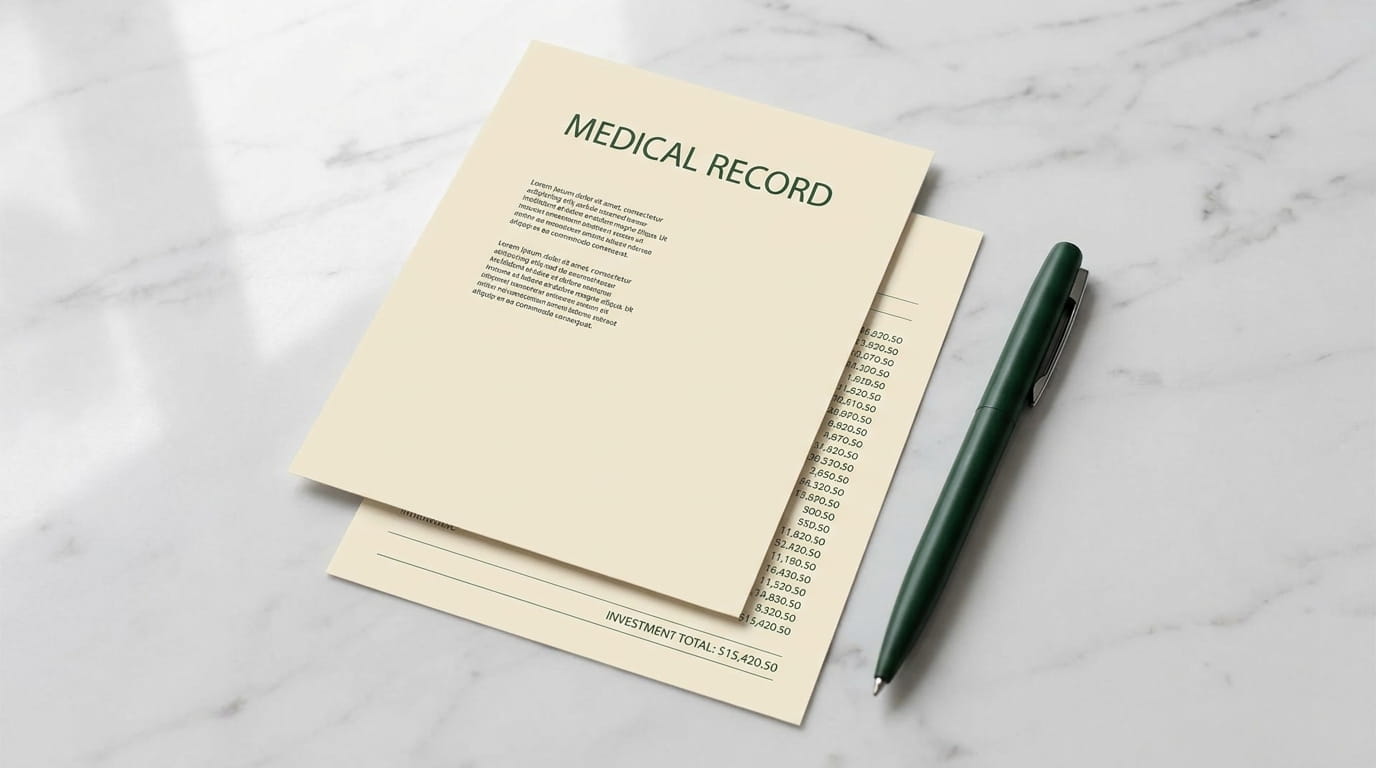
The IRS does not require you to reimburse yourself for a qualified medical expense in the year it occurs. You can save the receipt, leave the HSA invested, and reimburse yourself decades later. There is no statute of limitations on the reimbursement.
The practical play: pay current medical bills out of pocket from your regular checking account. Save digital copies of every receipt — a labeled folder in cloud storage works. Let the HSA balance grow tax-free for thirty years. In retirement, reimburse yourself for the old receipts. The withdrawal is tax-free because it ties to a qualified expense. The thirty years of investment growth was also tax-free.
Effectively, the receipts become a stockpile of tax-free withdrawal rights you can cash in at any point in the future.
The HSA is the only retirement vehicle in the US tax code that pays you to keep your receipts.
Who this works for
This strategy requires three things:
- An HDHP that fits your situation. Not everyone can or should be on an HDHP. If you have predictable, large medical needs — chronic conditions, expensive prescriptions, planned surgeries — the deductible math may not work, and the HSA strategy is irrelevant.
- The cash flow to pay medical bills out of pocket. The receipt trick depends on not raiding the HSA. If you cannot cover an emergency visit from regular savings, you should be using the HSA for current expenses, not stockpiling receipts.
- An HSA provider that lets you invest the balance. Some employer-sponsored HSAs charge investment fees or limit fund choices. If yours does, you can transfer the balance once or twice a year to a separate HSA provider — Fidelity is the obvious choice — that has no fees and full investment flexibility.
Three rules I follow
- Max out the contribution before contributing to a Roth. The HSA's triple tax advantage beats the Roth's double. If forced to choose, HSA first.
- Invest everything above $1,500 cash. Keep a small cash buffer in case I need to reimburse myself this year for something; invest the rest in a broad index fund. Provider permitting.
- Save receipts in a single labeled folder. Dated PDFs with the expense type in the filename. Once a year, total them in a spreadsheet and note the running "reimbursement room." Currently sitting at about $11,400 of unreimbursed receipts I am holding for future tax-free withdrawal.
A small list of caveats. Some states (notably California and New Jersey) tax HSA contributions and growth at the state level, partially undoing the triple benefit. Foreign residents typically cannot use HSAs at all. And the strategy assumes the underlying tax rules do not change for decades — which is not a safe assumption, but is the same assumption that backs every retirement account.
If you qualify for an HSA and are not maxing it out, you are leaving the most generous wrapper in the tax code unused. Fix that this year.